Star Trek™ Timelines
- 3.7
- Rating
- 5.00M
- Installs
- Free
- Price
 Analysis by App-foxy
I approached Star Trek™ Timelines expecting a familiar licensed role-playing game with space battles, but its appeal became clearer after spending time with it: the strongest part is the feeling of building a crew and gradually making better decisions with the resources available. It is not simply about tapping through fights. The game asks me to think about which characters and ships are worth developing, when to spend limited resources, and whether a difficult mission is worth forcing now or postponing until my roster improves.
That makes it a particularly interesting choice for Star Trek fans who enjoy long-term progression rather than a short, self-contained adventure. Developed by Tilting Point, this free game sits in the role-playing category and is aimed at players aged Everyone 10+. It has been available since January 13, 2016, so it feels like an established title rather than a new experiment. The current version is 12.2.1, and it runs on devices using Android 7.0 or later.
My overall impression is positive, with an important qualification: the game is much better when I treat it as a steady collection and strategy hobby than when I expect fast action or a perfectly even pace. The opening gives me clear reasons to keep playing, but later progress can feel more deliberate, and the presence of in-app purchases ranging from $0.99 to $399.99 per item means I have to be comfortable ignoring tempting shortcuts.
You May Also Like

 Blood Strike: 2.5 Anniversary
Blood Strike’s Loadouts Turn Every Drop Into a Tactical Gamble
A close look at Blood Strike’s custom loadouts: how fast access to signature weapons reshapes its battle royale rhythm, rewards preparation, and narrows the gap between fights.

 Pandora - Music & Podcasts
Pandora’s Music Is Easy to Start, but Harder to Recover
Pandora’s strength is its low-effort path from a seed to a station. Its weak spot is how much confidence it asks you to place in connection, setup, and quiet recovery.

 8 Ball Pool
 Is Built on Rivalries, Rematches, and Routine
A close look at the rivalries, rematches, shared routines, and unanswered safety questions that turn a quick pool match into a persistent mobile community.

 Samsung Music
’s Quiet Strength Is Playing What You Already Own
Its reach comes less from spectacle than from dependable access to a personal library. That simplicity is both the app’s strongest retention engine and its ceiling.

 AccuWeather: Weather Radar
AccuWeather Review: A Quick, Clear Forecast for Everyday Decisions
For everyday plans, the best forecast is the one you can understand quickly. AccuWeather makes rain timing, radar, and local conditions easy to act on, with a few trade-offs.

 Hill Climb Racing
Why Hill Climb Racing Still Turns Crashes Into One More Run
A tiny car, a bumpy hill and one more upgrade: Hill Climb Racing keeps resurfacing because its simple chaos makes every near-miss feel personal.
More From Our News Desk
View All News


Building a reason to return after the first missions
The early experience works because it gives the player several goals at once without requiring a complicated plan immediately. I can focus on completing the next mission, improving a useful crew member, strengthening a ship, or trying to reach content that was previously out of reach. Those objectives overlap, which is helpful: even a session that does not produce a major unlock can still leave me with a stronger roster or a clearer idea of what to improve next.
I found that the crew is more important than a simple list of collectible names. Each character changes the way I look at a challenge, so recruiting someone new is not only a cosmetic reward. A new addition can fill a weakness in my current lineup, make a mission more manageable, or give me a reason to revisit an earlier target. That creates a useful early loop: play, acquire something helpful, test the improvement, and then aim at a slightly more demanding objective.
The ship provides another layer of motivation. Space combat is the visible hook, but the decisions before a battle matter just as much as the encounter itself. I get more satisfaction from preparing a suitable lineup than from treating every fight as an automatic victory. When a mission goes badly, I usually have a practical question to answer: was the crew poorly matched, was the ship underdeveloped, or did I spend resources in the wrong place?
For a new player, my first recommendation is to avoid spreading upgrades across every available character. The game becomes easier to read when I choose a small group that covers different needs and invest in them consistently. That does not mean permanently abandoning the rest of the roster. It means creating a dependable core before trying to improve everyone at once. This is one of the first trade-offs the game communicates well: variety is exciting, but focused development produces more reliable progress.
The early goals are also suitable for short sessions. I can open the game with one concrete intention, such as improving a ship or clearing a troublesome mission, instead of needing a long uninterrupted play period. That matters for a mobile role-playing game. It makes the title easier to fit into a commute, a break, or a quiet evening, although the broader progression becomes more rewarding when I return regularly rather than playing only once every few weeks.
Why the roster feels like more than a checklist
The most enjoyable collection decisions are the ones that make me reconsider an existing plan. A familiar character may be emotionally appealing, but usefulness depends on the situation. I learned to separate “I like this character” from “this character solves the problem in front of me.” That distinction gives the roster genuine strategic weight and prevents every new unlock from feeling interchangeable.
There is also a practical reason to keep reviewing the lineup. A character who seems unimportant during the opening can become valuable when a later challenge asks for a different combination of abilities or roles. I would not discard a potentially useful crew member simply because the first few missions did not showcase that character well. Keeping notes mentally about who performs reliably in which situations saves resources and reduces the urge to upgrade impulsively.
This is where the game differs from a straightforward action alternative. In a faster space game, improvement may depend mostly on reflexes or moment-to-moment control. Here, preparation and roster management carry more of the responsibility. Players who enjoy making a plan will appreciate that. Players who want to personally pilot every maneuver may find the experience less direct than expected.
How progress becomes visible and where the pace changes
Progress is communicated through several small signals rather than one dramatic transformation. A mission that once felt risky becomes routine. A ship survives longer. A crew member reaches a point where a previously awkward encounter is suddenly manageable. Those moments are satisfying because they show that my earlier choices mattered, even when the improvement arrived gradually.
I especially like the way progress encourages comparison with my own previous performance. Instead of asking whether I am already powerful, I can ask whether the current roster is better organized than it was yesterday. That mindset is useful because the game is designed around accumulation. A single reward rarely changes everything, but a sequence of sensible choices can make the whole account feel more capable.
One practical workflow helped me avoid wasting resources: before upgrading, I checked which character or ship was blocking my next realistic goal. If the obstacle was a weak lineup, I invested in the crew. If survival was the issue, I looked at the ship instead. If I could not identify a specific obstacle, I saved the resources. This sounds obvious, but it prevents the common mobile-game mistake of spending simply because an upgrade button is available.
The game also benefits from giving me reasons to revisit content rather than treating completed missions as permanently irrelevant. Earlier objectives can serve as useful practice, resource targets, or confidence checks after changing the lineup. I found this more engaging than a system where every old mission becomes meaningless the moment a new chapter opens.
At the same time, the progress signals are not always equally strong. Early rewards feel frequent enough to maintain momentum, while later gains require more patience and planning. That shift is normal for a long-running role-playing game, but it can feel abrupt if I am used to constant unlocks. The title is at its best when I accept that progress may come from improving efficiency, not just from receiving a major new character.
Handling the difficulty curve without turning it into a grind
The difficulty curve is most enjoyable when it asks me to adjust rather than simply repeat the same action. A failed attempt can be useful if it reveals that my current approach is poorly suited to the mission. I can then change the crew, strengthen a relevant ship, or wait until another improvement makes the challenge more reasonable. That creates a sense of problem solving instead of pure punishment.
My advice is to treat a difficult mission as information first and a wall second. If the same attempt fails repeatedly, I stop spending resources blindly. I look for the specific weakness in my setup and decide whether the next upgrade will actually address it. This approach is particularly important for players who want to remain free-to-play, because careful choices matter more when purchases are not being used to bypass every delay.
There are moments when the challenge feels less like a clever test and more like a request for additional development time. That is the main friction in the pacing. I do not mind waiting when I understand the purpose of the delay, but repeated attempts with little change can make a session feel static. The solution is to keep a secondary objective available: improve a different crew member, prepare another ship, or clear an easier task rather than staring at one blocked mission.
This gives the game a more sustainable rhythm. I can make progress even when the ideal target is temporarily beyond reach. It also prevents the roster from becoming too narrow. A player who only develops one preferred lineup may eventually run into problems when a different type of challenge demands flexibility.
Compared with many role-playing games on mobile, the challenge here feels less dependent on rapid input and more dependent on preparation. That makes it accessible to players who prefer planning, but it also means the excitement may be lower for someone seeking constant action. Compared with a purely collectible game, however, the ship and mission decisions give the roster more purpose. Collection is not the entire experience; it is the material I use to solve problems.
What keeps the loop going, and what can push too hard
The retention loop succeeds when the next goal feels close enough to imagine but not so easy that it becomes automatic. I often found myself thinking, “one more improvement and I can try that again.” That is an effective form of motivation because it connects the next session to a specific target. The danger is that the same structure can turn into pressure if every meaningful step appears to require more time or spending.
The free entry point is a genuine advantage. I can try the game without paying upfront and decide whether the combination of Star Trek characters, ship management, and gradual role-playing progression suits me. The large audience—over five million installs—also suggests that it has reached well beyond a small niche, while its average rating of 3.7 from around ninety-eight thousand ratings presents a more mixed picture than a universally loved game. I read that as a reason to approach it with realistic expectations rather than as an automatic warning.
In-app purchases are the major consideration. Individual purchases range from $0.99 to $399.99, which is a very wide span. I would strongly recommend deciding on a personal spending limit before beginning, especially if collection goals are a big part of the appeal. The game is easier to enjoy when I see purchases as optional convenience rather than as the expected route through progression.
That advice is not only about saving money. Spending can also change the way the game feels. If I remove every obstacle immediately, I lose the satisfaction of figuring out which crew members deserve attention and which upgrades solve a real problem. For me, the most rewarding progression comes from making a plan and watching it work. Players who prefer instant access to a broad roster may reasonably feel differently, but they should know that the free experience is built around patience.
The retention design is strongest for fans who enjoy returning to an ongoing universe. I like having a reason to check on the state of my crew, reconsider a ship, and work toward a longer-term objective. It is less suitable for someone who wants a complete story with a clear ending in a few evenings. The game asks for an ongoing relationship, and that is both its identity and its biggest commitment.
A realistic daily play pattern
Imagine opening the game during a short lunch break. I would not try to solve the hardest mission immediately. Instead, I would check which crew member is closest to becoming useful, complete a manageable objective, and use the result to improve the lineup. Later, with more time, I could attempt the difficult mission again and see whether the change actually mattered. That two-step routine makes the game feel productive without requiring every session to contain a major victory.
On a quieter evening, I might compare two possible upgrade paths. One could improve my strongest ship, while the other could make a weaker crew member viable for a specific mission. The better choice would depend on my immediate goal, not on which upgrade looks more impressive. This is a small but meaningful strategic habit: progress is faster when I spend toward a problem I can name.
I also found it useful to stop after a successful improvement instead of continuing until frustration set in. Because the game is designed for repeated returns, there is little benefit in turning every session into a marathon. Ending with a clear next objective makes it easier to come back, and it reduces the temptation to spend simply to keep a stalled session moving.
Who should play it and who should look elsewhere
I would recommend this game to Star Trek fans who enjoy assembling a roster, comparing options, and slowly turning an imperfect crew into a dependable team. It is also a good fit for mobile players who like space combat but do not need every encounter to be controlled in real time. The combination of recognizable science-fiction flavor, ship-focused challenges, and role-playing progression gives it a distinct identity within the category.
I would be more cautious recommending it to someone who dislikes collection systems, recurring progression, or the possibility of waiting for improvements. The game can also disappoint players who expect a highly reactive cockpit experience. Its battles are part of a wider management loop, so the most important decisions often happen before the fight rather than during every second of it.
Players who want a short premium adventure with a fixed path should choose a different kind of game. A conventional single-player role-playing title may offer a more controlled narrative and a clearer endpoint. A competitive action game may deliver more immediate excitement. Star Trek™ Timelines is better for the person who enjoys having a living project on a phone: a roster to refine, ships to strengthen, and challenges to revisit with a better plan.
The age rating of Everyone 10+ makes it approachable for a broad audience, but parents should still be aware that optional purchases are part of the experience. I would not hand the game to a younger player without discussing spending first. The free price makes trying it simple, yet the purchase range means sensible boundaries are important from the beginning.
My verdict on the long-term progression
After looking at the full loop, I think the game earns its place as a long-term role-playing option rather than relying only on its license. The early goals are clear, the roster creates meaningful choices, and the ships give the collection system a practical purpose. Progress is most satisfying when I use a specific upgrade to overcome a specific problem, not when I chase power without a plan.
The difficulty curve is generally manageable if I am willing to pause, reorganize, and return later. Its weaker moments appear when the next step feels like a delay instead of a decision. The purchase structure can add pressure, particularly for players who are highly motivated by collecting every available character or accelerating progress. I consider that the main reason to approach the game with a budget and a patient mindset.
Still, I found enough strategic texture to keep coming back. The best sessions are not necessarily the ones with the biggest reward. They are the sessions where I understand why a mission failed, make a focused adjustment, and succeed because of that adjustment later. That sense of earned improvement is the game’s strongest quality.
With around sixteen thousand written reviews contributing to its store presence and an average of 3.7, the reception feels appropriately mixed for a game that asks for sustained attention. I would not call it a perfect fit for everyone, but I would recommend trying the free version if the idea of managing a Star Trek crew and improving a starship over time sounds appealing. My main recommendation is to play for the planning, not the shortcuts. If that rhythm suits you, this is a rewarding space role-playing game; if you need rapid action or a purchase-free, tightly finished campaign, another option will probably serve you better.
FAQs for Star Trek™ Timelines
01What is Star Trek™ Timelines?
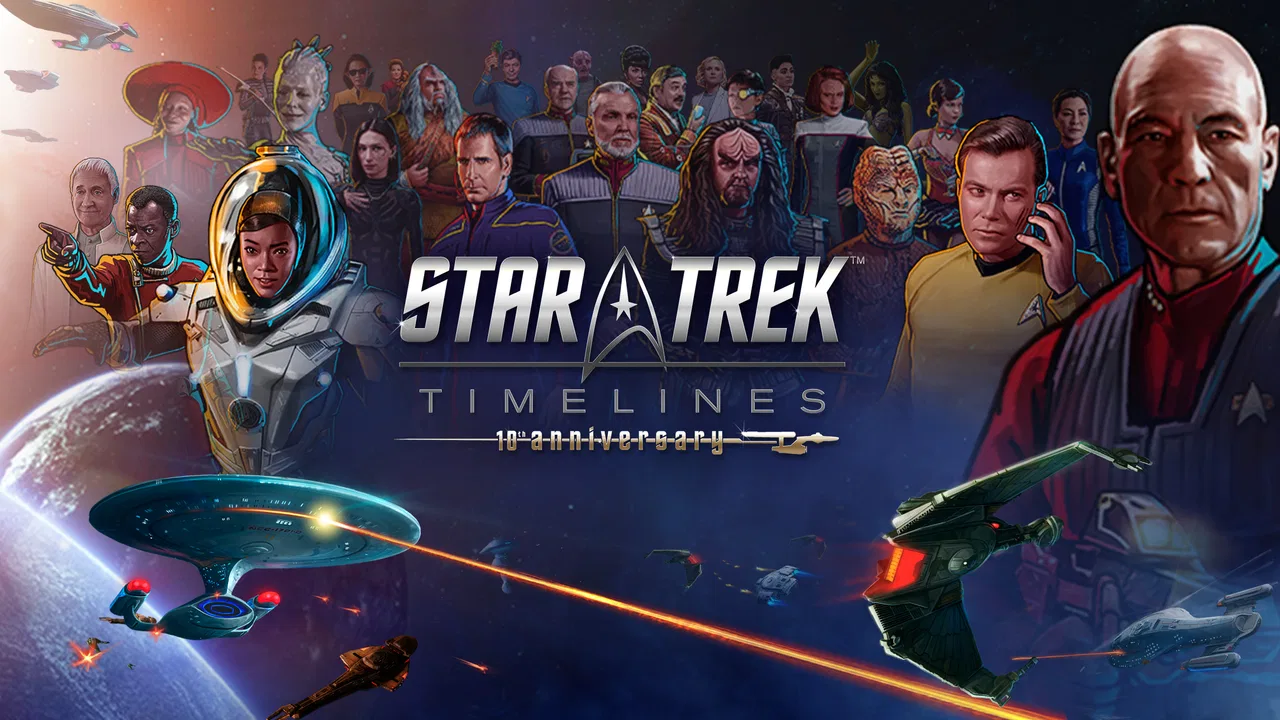
Star Trek™ Timelines is a strategy role-playing game that brings together characters, ships, locations, and storylines from across the Star Trek universe. You create a crew, manage a starship, complete missions, participate in space battles, and make decisions during narrative events. It combines collectible character mechanics with exploration, diplomacy, resource management, and competitive multiplayer activities.
02Can I play Star Trek™ Timelines offline?
No, Star Trek™ Timelines generally requires an active internet connection because the game connects to online servers for account progress, events, synchronization, purchases, and multiplayer features. Although some menus or previously loaded content may appear briefly during a connection interruption, the main gameplay experience is designed for online use. A stable Wi-Fi or mobile data connection is recommended.
03Is Star Trek™ Timelines free to download and play?
Star Trek™ Timelines is free to download, but it includes optional in-app purchases. You can progress through missions, collect crew members, upgrade ships, and participate in events without paying, although some activities may take time or require careful resource management. Purchases can provide premium currency, packs, or other conveniences, so parental controls are advisable on shared devices.
04Does the game include characters and content from different Star Trek series?
Yes. One of the game’s main attractions is its broad selection of Star Trek content. You can encounter familiar characters, alternate versions of officers, starships, and references from multiple television series and films. The collectible format allows unusual crew combinations, making it appealing to longtime fans while still giving newcomers a way to discover the franchise through missions and events.
05What kind of gameplay and device requirements should I expect?
The game combines turn-based space combat, crew selection, away missions, ship upgrades, resource management, and timed events. Progress depends on improving officers, completing objectives, and choosing suitable abilities for different challenges. Because it is a live-service title, updates and server communication are important. Performance may vary by device, so keeping the operating system and game version updated is recommended.
Pros
- Deep roster of Star Trek characters from multiple series
- Strategic ship battles offer more than simple tap-based combat
- Regular events provide new objectives and limited-time rewards
- Story missions include familiar locations
- factions
- and lore references
- Crew management and away missions add variety beyond space combat
Cons
- Progress can become heavily dependent on grinding and resource management
- Premium currency and packs may tempt frequent spending
- Some missions rely on repetitive combat and waiting timers
- The large crew roster can make upgrades and choices feel overwhelming
- Requires a stable internet connection for most gameplay features

Star Trek™ Timelines
Gallery